
The Structural Importance of Proper Seamless Construction
Committing dozens of hours and premium yarn to a seamless sweater without a solid structural foundation results in garments that slide off the neck, bunch at the underarms, or stretch out of shape. Mastering the specific architecture of the Cocoknits method prevents these fit issues. It mimics the tailored lines of set-in sleeves without the bulky seams.
Traditional seamed garments rely on the physical join of two fabric pieces to create a rigid skeleton. Seamless knitting removes that skeleton. Understanding the precise sequence of shoulder shaping and cast-on techniques is the difference between a wearable heirloom and a frustrating wardrobe failure. Every project is a journey worth celebrating—but that journey requires a reliable map. The right approach transforms a pile of string into a structurally sound garment that withstands years of wear.
Core Mechanics: Provisional Cast-Ons and Short-Row Shaping
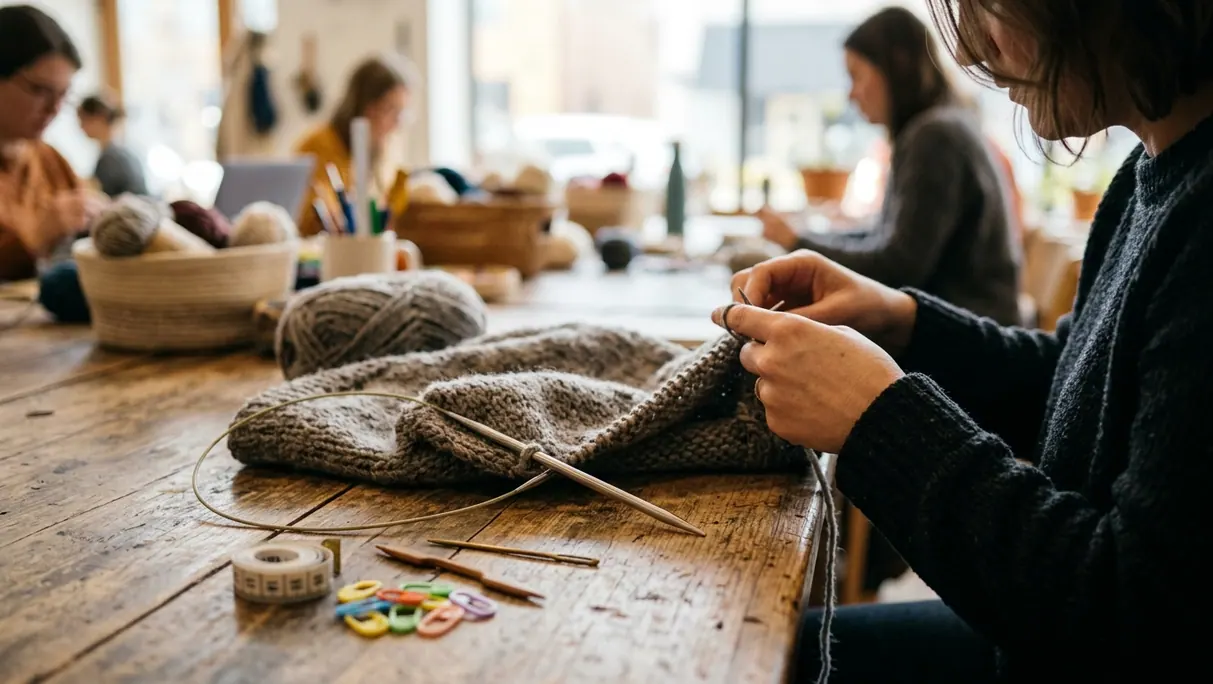
The foundation of the Cocoknits method relies on starting at the shoulders rather than the neckline or hem. Where early evaluations of neck-down starts revealed rigid fabric lines, shifting the entry point to the shoulders solved the drape problem. A provisional cast-on serves as the starting technique. This allows live stitches to be picked up later for seamless continuation down the front and back.
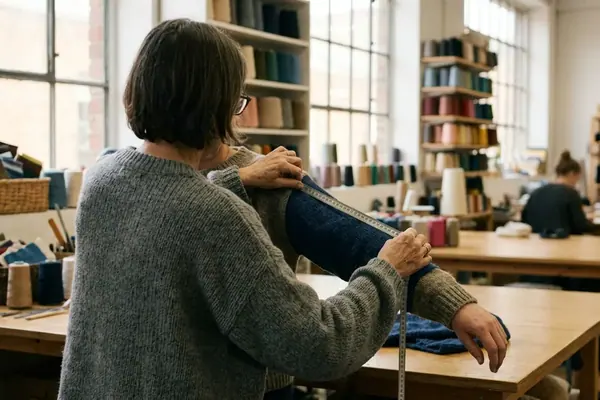
Short-row shaping slopes the shoulders. The fabric follows the natural anatomical curve of the body rather than sitting rigidly straight. The shoulder slope must match this anatomical curve within about 2 cm to achieve the optimal fit. Any deviation beyond this measurement causes the fabric to buckle across the collarbone.
Summary: Starting at the shoulders and using short-rows creates a natural slope that mirrors human anatomy, eliminating the stiffness of traditional top-down raglans.
Essential Techniques for Edges and Finishing
While the provisional cast-on is standard, Judy's Magic CO frequently acts as a highly effective alternative for specific seamless starts. Edges require careful planning to maintain the integrity of the overall design. To maintain elasticity at the hem, 3x3 ribbing provides a gentle, non-restrictive grip. Wear trials of 2x2 alternatives demonstrated restricted stretch, prompting the shift to the wider ribbing format.
Jeny's Stretchy BO ensures the ribbed edges can expand over the hips and shoulders without snapping. Bind-off tension is set to allow roughly 4 cm expansion over the hips.
Quick Tip: Always test your ribbing elasticity after blocking, as the yarn's memory changes significantly once it blooms in water.
Material Selection: Managing Drape and Bias
Yarn choice fundamentally alters the behavior of seamless architecture. Reading through recent yarn reviews helps identify which fibers possess the necessary grip for top-down construction. The method performs exceptionally well with rustic wools like Biches et Buches Le Petit Lambswool. This yarn offers high structural memory. The woolen-spun fibers grab onto each other, locking the stitches in place.
For warmer climates, Isager Viscolin provides a beautiful alternative. This blend of viscose and cotton works beautifully for specific garment models like the Belle. While crochet often relies on dense stitches to create structure with plant fibers, knitting requires the yarn itself to do the heavy lifting.
Note: A provisional cast-on fails on slippery plant fibers. The lack of animal fiber also means Isager Viscolin will not hold the 3x3 ribbing as crisply as Le Petit Lambswool. Knitters must adjust their expectations for waist elasticity when substituting yarns.
Sourcing Cocoknits Patterns and Materials
Cocoknits operates as the primary pattern designer, creating the foundational blueprints for this top-down method. The ecosystem of modern knitting patterns relies heavily on clear, standardized instructions. For local yarn shops and independent retailers, Deep South Fibers serves as the pattern distributor through an ongoing multi-year partnership. This ensures these technical resources are widely accessible to the fiber arts community.
Procuring the correct pattern version through authorized distributors guarantees access to the most updated schematics and techniques & tutorials. Though regional distribution networks occasionally delay print updates by a few weeks, securing the official release remains the proven way to avoid errata. Discussing these updates at local community & events helps clarify any subtle changes to the grading.
Your Next Step: The Technique Swatch
Gather your tools & notions, select your chosen yarn, and pick up your circular needles to create a dedicated technique swatch. Short-row depth varies with needle diameter, making this physical practice run essential for accurate sizing.
Execute a provisional cast-on of 20 stitches. Work three short-rows across this small sample to observe the sloping effect firsthand. Finish the swatch with a 3-needle bind-off. Complete this specific sequence today to build muscle memory and verify your gauge before you cast on the full sweater.




Discussion
No comments yet. Be the first!
Write a Comment