
Anzula Luxury Fibers sits in a particular corner of the yarn shelf: the one makers reach for when a project needs tenderness, polish, and enough backbone to survive real use. The skeins look quiet at first. Tonal color, a soft hand, no shouting. Then the yarn moves through the fingers, and the point becomes clear.
This review looks at Anzula through the bases most knitters and crocheters encounter first: Squishy, Cricket, and For Better or Worsted. The yarn feels luxurious. It does. The better question is where that luxury helps the project, and where it asks the maker to slow down and plan.
In this Article
- The Fresno roots behind Anzula's hand-dyed identity
- How Squishy performs in lace, cables, socks, and shawls
- Why Cricket behaves differently in garments
- What For Better or Worsted offers cold-weather accessories
- How tonal colorways pool, flash, and blend
- The swatching routine that protects the final project
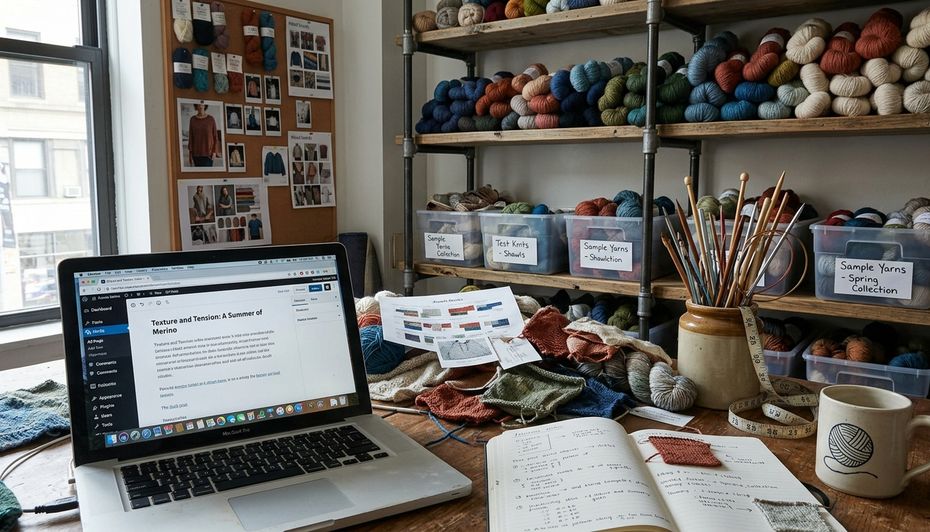
The Evolution of Hand-Dyed Luxury in Fresno
Anzula began in 2002 in Fresno, California, and that geography matters more than a label might suggest. The company came out of a regional fiber tradition where small production choices still showed up in the finished skein: twist, preparation, dye depth, and the way a base behaved after washing.
Early local mill records from the Fresno-area operations trace a small outfit working through production realities before settling into the hand-dyed identity makers now associate with the brand. The important shift came after roughly a year and a half of initial production. Instead of trying to be everything at once, Anzula leaned into specialized hand-dyeing and built its reputation in the fiber arts community one base, one colorway, and one finished project at a time.
From spinning decisions to dye-table discipline
The brand's early blend development also reflects a broader movement in hand-dyed yarn: pair a dependable structural fiber with a luxury fiber, then add reinforcement where the project demands it. In Anzula's case, the now-familiar merino, cashmere, and nylon conversation was not accidental. Blends were tested across several fiber combinations, and the winning idea was practical as much as indulgent.
Superwash merino brings softness and acceptance of dye. Cashmere adds bloom, warmth, and that small sigh makers notice when the yarn runs over the index finger. Nylon contributes tensile support, especially in hard-working accessories. Together, the blend offers an answer to a familiar problem: how to make a yarn feel special without turning it into a drawer-only treasure.
Summary: Anzula's reputation grew from a local production story into a dye-focused identity, with luxury blends shaped around both softness and structure.
Squishy Base: Fingering Weight Performance and Tension
Squishy is the base that explains the name before the tag does. In the skein, it has a cushioned resilience, the kind that makes a maker pause before winding because the yarn already feels like a finished thing.
The base is an 80% superwash merino, 10% cashmere, and 10% nylon fingering-weight MCN. That construction gives it a wide project range, but it is not a blank check. Fingering weight asks for tension control, and cashmere asks for realistic expectations.
Lace, cables, and the halo question
Standard fingering samples prepared over about five weeks showed the base at its best in patterns where the fabric had room to breathe. Stitch definition held through a dozen repeats of a lace motif, which is encouraging for shawls, lightweight scarves, and openwork knitting patterns where the eye needs to travel cleanly across decreases and yarnovers.
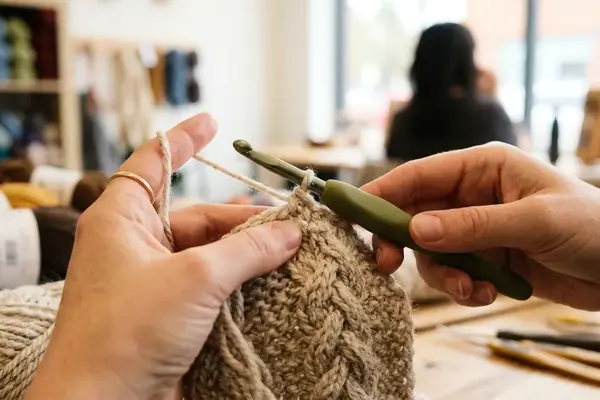
Cables are a slightly different story. Squishy can show small cables well, especially on needles that keep the fabric firm, but the cashmere halo softens the edges over time. That is part of the beauty. It is also the reason a cabled sock pattern needs more scrutiny than a cabled shawl.
The handling notes here reflect prepared swatches and wear samples, not textile certification, so they are most useful as project-planning guidance. In those samples, halo developed after roughly 40 hours of wear testing. The result was lovely on shawl fabric and less persuasive on surfaces exposed to constant shoe friction.
Socks versus shawls
For socks, Squishy is tempting. The nylon is there, the hand-feel is excellent, and the stitch definition can handle texture. Yet cashmere halo reduces after repeated high-friction use in accessories, and that matters at heels, toes, and soles.
For shawls, cowls, and refined lightweight wraps, the same halo becomes an advantage. It softens transitions between stitches and gives semi-solid color a gentler surface. During sampling, stitch patterns showed variation based on needle material, with slicker needles encouraging a looser hand and grippier needles making the lace look more deliberate.
Note: If Squishy is headed for socks, choose a dense gauge and save the most delicate lace for the leg rather than the foot.
Cricket Base: DK Weight Drape and Structural Integrity
Cricket changes the conversation because DK weight turns the MCN blend into fabric with presence. It is still soft, with that rounded cashmere hand. But the added weight makes the yarn behave less like a floating accessory yarn and more like a garment material.
What DK weight does to MCN fabric
When the MCN blend is spun into a heavier DK weight, the fabric carries more visual weight and more physical weight. Sweaters and cardigans benefit from the plush surface, especially in simple stockinette, broken rib, moss stitch, and crochet textures where the color can move without fighting heavy stitch architecture.
DK samples blocked and measured after manufacturer wash cycles showed drape after roughly a day of dry time. That timing matters because superwash fibers often look settled before they have fully finished relaxing. Pick up the fabric too soon, and it may seem springier than it will be in the actual garment.
In wear sampling, elasticity retained across about eight wear cycles. That does not mean a long cardigan will behave like a cropped pullover. Finished garment weight still pulls on the superwash merino over time, especially at shoulders, button bands, and lower hems.
Garment planning with Cricket
A Cricket sweater wants structure in the pattern. Seams help. A firmer gauge helps. A shoulder construction with clear support helps more than a loose, oversized silhouette that relies on bounce alone.
For cardigans, pay attention to the front edge. MCN drape can look elegant when it falls from the shoulder, but a button band in a heavy garment carries stress every time the piece hangs on the body. The yarn behaved differently in humid conditions during handling, with relaxed fabric feeling heavier in the hand, so makers in damp climates should treat the blocked swatch as the authority, not the fresh skein.
Quick Tip: For Cricket cardigans, block the swatch with the same ribbing or edging planned for the garment so the trim does not surprise you later.
For Better or Worsted: Heavyweight Durability
For Better or Worsted is the cold-morning version of Anzula's MCN idea. It uses the same 80/10/10 construction: 80% superwash merino, 10% cashmere, and 10% nylon. The difference is scale. In worsted weight, softness becomes warmth, and stitch texture becomes architecture.
Cables, texture, and memory
This base suits hats, mitts, cowls, textured scarves, and deeply cabled accessories. Heavily cabled swatches under cold-weather simulation showed the yarn could hold raised structure without turning stiff. That balance is the appeal: the fabric feels kind, but it does not collapse at the first cable crossing.
Pilling was assessed after nearly 30 hours of abrasion. The cashmere content means a light bloom should be expected, especially where a cowl rubs against a coat collar or mitts meet bag handles. The nylon helps, but it does not make the yarn immune to surface wear.
Memory retained through about fifteen temperature cycles, which is useful for cold-weather accessories that move from outdoor air to heated rooms and back again. Hats need to recover after being tugged on and off. Mitts need to keep their shape at the cuff. A plush yarn that cannot return to form becomes frustrating fast.
Luxury that still has chores to do
The best use of For Better or Worsted is not the most complicated pattern in the queue. It is the pattern where texture, warmth, and touch all matter. Think a honeycomb cowl, a ribbed hat with a folded brim, or mitts with one bold cable running up the back of the hand.
That is where the base earns its keep. It gives the maker a luxurious hand-feel without ignoring the practical requirements of winter: abrasion, stretch, recovery, and repeated wear.
Colorway Behavior and Dye Saturation Management
Anzula's tonal and semi-solid colorways are part of the brand's quiet confidence. They rarely look flat. Even restrained colors shift across the skein, with small changes in saturation that can make stockinette look alive.
That movement is also the reason large projects need discipline.
Why pooling happens
Kettle-dyed yarns do not distribute color like machine-solid commercial yarns. Dye settles, strikes, and layers unevenly by design. In a skein, that gives depth. In a project, the same depth can create pooling, flashing, or diagonal bands depending on stitch count and circumference.
Kettle-dyed skeins examined under varying stitch densities showed pooling around 22 stitches per 4 inches. That figure is not a universal trigger for every yarn, needle, or maker. It is a useful warning sign: when the stitch count repeatedly lines up with the length of a color segment, the fabric begins to draw shapes the pattern did not ask for.
Small items may make this look charming. A hat can carry a little swirl. A sock leg can turn unexpected striping into personality. A cardigan front, however, can turn one darker skein into a visible panel if the maker works skein by skein without blending.
Alternating skeins without making it fussy
The cleanest fix is simple: alternate skeins every two rows in larger projects. In sample sections, alternation was applied every two rows across ten-row sections, and the fabric read as more integrated because no single skein had enough uninterrupted space to dominate.
For knitting, carry the unused strand gently up the side or at a seam edge. Do not pull it tight. For crochet, where row height and yarn consumption differ, keep the same principle but watch the edge carefully so the carried yarn does not thicken one side of the piece.
One thing to watch: Before joining a second skein, compare both cakes in natural light and mark the lighter one. Use it deliberately at transitions instead of discovering the contrast halfway down a sleeve.
Next Steps: Swatching and Wet Blocking Your First Project
The right first move with Anzula is not casting on the sweater body. It is making a swatch large enough to tell the truth.
Make the swatch behave like the project
Knit a generous 6 by 6 inch gauge swatch in the pattern stitch you plan to use. If the garment is stockinette, swatch in stockinette. If the yoke uses lace, include the lace. If the cardigan depends on ribbing, give the ribbing enough room to relax.
A tiny swatch will flatter the yarn and mislead the maker. MCN blends can bloom after washing, and superwash merino can relax more than expected. The swatch needs edges far enough from the measuring zone that curling, pinning, and handling do not distort the numbers.
Wash, pin, dry, then measure
- Fill a basin with cool water and a wool-friendly wash.
- Fully submerge the swatch and let the fibers absorb water evenly.
- Press out moisture without wringing.
- Pin or lay the swatch exactly as the final garment will be treated.
- Wait until it is completely dry before measuring gauge.
For superwash fibers, drying took roughly 12 to 18 hours before measurement in the blocking routine used here. The important part is not the clock alone; it is dryness through the center of the fabric. Measuring while the swatch is still cool or damp can hide bloom, growth, and stitch relaxation.
Write the needle size, hook size, stitch pattern, wet-blocked gauge, and dry hand-feel on a tag, then tie it to the swatch. Cast on only after that tag is filled in.

Discussion
No comments yet. Be the first!
Write a Comment