
Geographic Scale and Route Logistics
The Texas Hill Country Yarn Crawl spans several hundred miles across Central Texas, linking fourteen independent retailers in one coordinated Thursday-through-Sunday event.
That single sentence changes the whole assignment. This is not a slow afternoon of neighborhood browsing with a latte in one hand and a project bag in the other. It is a route, a calendar, and a series of decisions made before the first skein gets touched.
Why the Map Matters Before the Yarn Does
Attendee travel logs from recent crawls showed a steady need for multi-town sequencing across the Hill Country road network. The pattern was easy to recognize at the shop level: makers who wanted to visit more than a few stops had to think in clusters, not impulses. A beautiful shop across the route may be worth the drive, but only if the next stop still fits the day.
One easy mistake is assuming every stop behaves like the next. Shop hours can vary, rural roads can slow down a tidy plan, and local weather can shift attendance in ways that ripple through parking lots, checkout lines, and lunchtime timing.
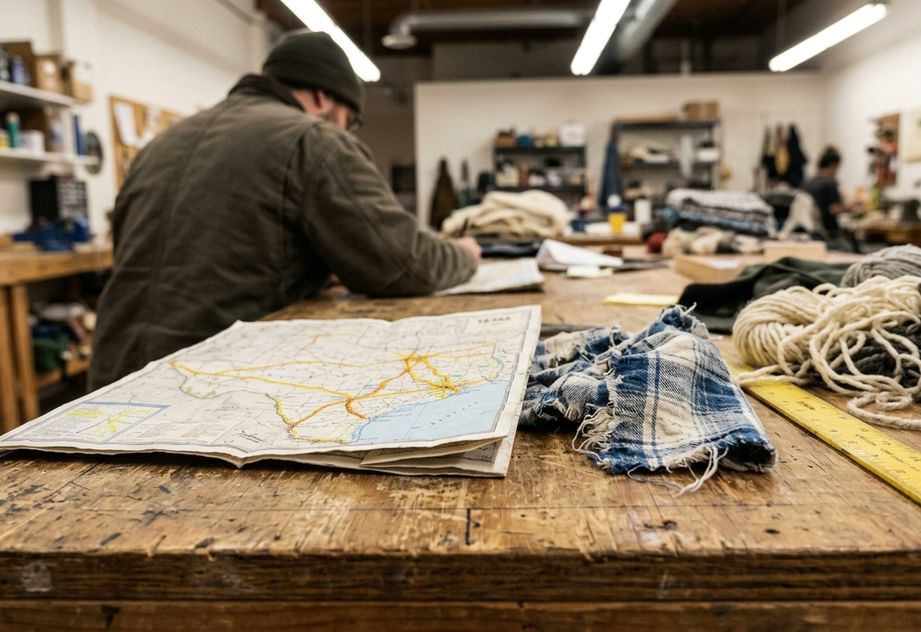
Note: The crawl rewards enthusiasm, but it favors knitters and crocheters who build a route around distance, daylight, and realistic browsing time.
The Hill Country itself adds texture to the event. Drives between stops can be part of the pleasure, with long stretches of road between bursts of yarn, samples, and conversation. But those same stretches can drain a schedule. A maker who lingers over hand-dyed fingering weight at the second shop may have to cut a later town from the day.
From Casual Visit to Strategic Crawl
The practical baseline is simple: this crawl asks for route mapping and time management. Attendees who treat it like a local shop hop often discover by midday that the geography has made decisions for them.
The stronger approach starts with a priority list. Some makers plan around must-visit retailers. Others follow exclusive yarn reviews posted by shops before the event, or build a path around knitting patterns they want to see in person. The most grounded plans leave room for the ordinary realities of travel: gas, food, restrooms, and a little space to sit with a skein before deciding whether it belongs in the basket.
There is a charming tension here. A yarn crawl sells discovery, but this one runs best when discovery has a framework.
Regional Dyers and Exclusive Colorways
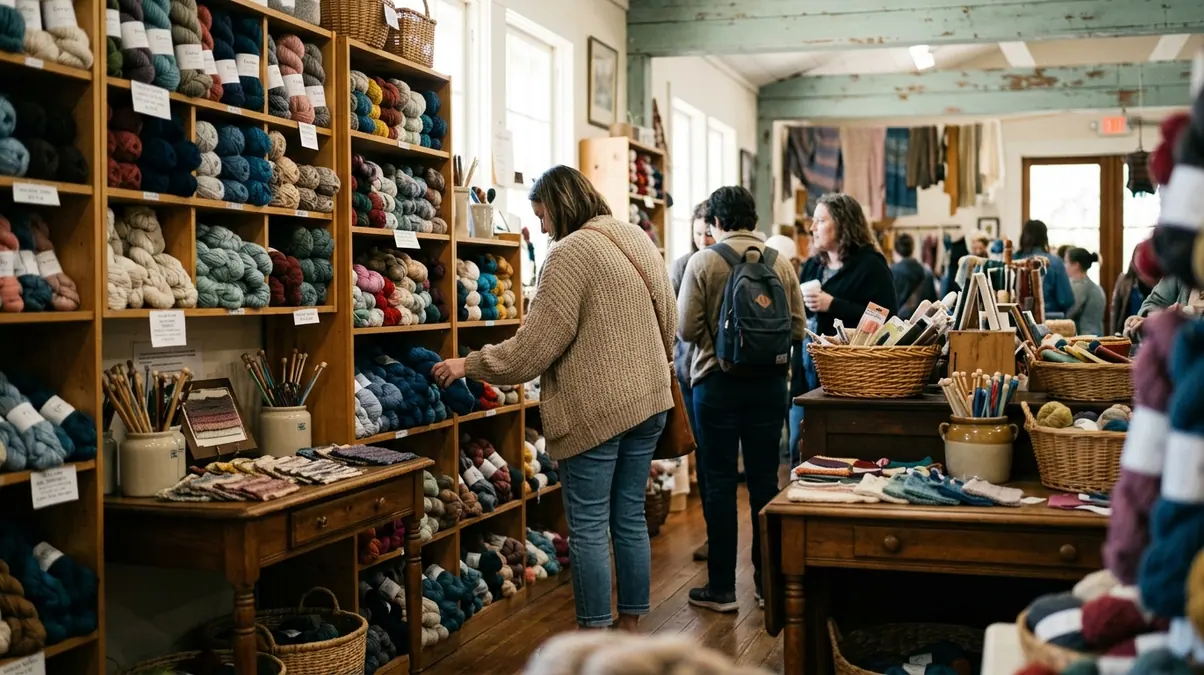
The first thing many attendees notice is color. Not color in the abstract, but a wall of skeins that could only have happened here, in this place, for this weekend.
Limited Batches With a Local Accent
Event-exclusive yarns and custom colorways have become one of the defining engines of the Texas Hill Country Yarn Crawl. Colorway selections follow direct shop-dyer coordination records for the annual theme, and limited batches are released at each location during the four-day window. That makes the yarn feel less like general inventory and more like a timestamp.
A crawl colorway has a different pull than a standard shop restock. It carries the theme, the dyer’s hand, and the memory of the drive. For many makers, that is enough to move a skein from admired to purchased.
The most interesting work happens in the partnership between brick-and-mortar shops and Texas indie dyers. Shops understand their customers’ habits: the sweater knitter who wants sweater quantities, the sock knitter who buys one bright skein at a time, the crocheter hunting for a color that will not muddy in textured stitches. Dyers bring the color language and batch discipline. Together, they produce something more specific than a seasonal display.
Patterns, Purchases, and the Material Trail
The Ply Yarn editorial team’s on-the-ground tracking paired shop-floor observation with on-site inventory checks during the event. The clearest behavior appeared around limited-run knitting patterns and crochet samples built around crawl materials. When a displayed project showed exactly how a themed colorway behaved in fabric, the yarn stopped being a souvenir and became a plan.
That distinction matters. A skein purchased for memory may sit in stash for years. A skein purchased with a pattern beside it has a job before it leaves the shop.
The evidence has a useful boundary: on-site inventory checks capture what was visible during crawl hours and through participating retail spaces, not every later online order or private stash decision. Still, the pattern is strong enough to shape how shops prepare. They do not merely stock exclusive yarn; they stage it with tools & notions, sample garments, and techniques & tutorials that help a maker imagine the first cast-on.
Quick Tip: If a crawl colorway catches your eye, ask whether the shop has a sample or recommended pattern nearby. Seeing the yarn worked up can prevent a beautiful but directionless purchase.
This is where regional craft profiles rise. A dyer who might otherwise sell mostly within a small circle suddenly appears across multiple towns in a shared event story. The shop gains a reason for visitors to arrive early. The dyer gains a public test of color, base, and theme. The attendee gets yarn with a local fingerprint.
Passport Mechanics and Community Engagement
The passport system is deceptively simple: visit a shop, collect a stamp, keep moving. In practice, it turns a scattered retail map into a shared game board.
Fourteen Stamps, Fourteen Invitations
Stamps are collected at each of the fourteen stops, and that mechanic changes behavior. A maker who might normally visit one favorite shop now has a reason to cross into another town, walk into an unfamiliar retail space, and start a conversation with staff they have never met.
Shop visit tallies reviewed around the passport system showed increased cross-town movement. The passport does not just record attendance; it nudges it. It gives structure to curiosity, especially for visitors who need a small push to leave their usual orbit.
There is also a social signal tucked inside the booklet. A partially stamped passport says, “I am in this too.” At a crowded counter, that can be enough to begin a conversation about routes, lunch stops, sock yarn, or whether the next shop still has the color everyone is whispering about.
What Happens Inside Small Shops at Peak Hours
Peak foot traffic was observed roughly between late morning and mid-afternoon, which is exactly when the romance of the crawl meets the square footage of real stores.
Independent yarn shops are intimate by design. That intimacy is part of their magic: the narrow aisle of wool blends, the staff member who remembers a customer’s shawl problem from last month, the table where a beginner can get help reading a pattern repeat. During crawl hours, those same qualities require fast adaptation.
Shops often have to manage a different rhythm. Browsers arrive in waves. Checkout becomes a conversation and a bottleneck. Staff answer questions about exclusive colorways while also stamping passports, finding needle sizes, explaining fiber content, and guiding traffic toward samples that can handle being touched all day.
The best-run rooms do not feel frantic. They feel awake.
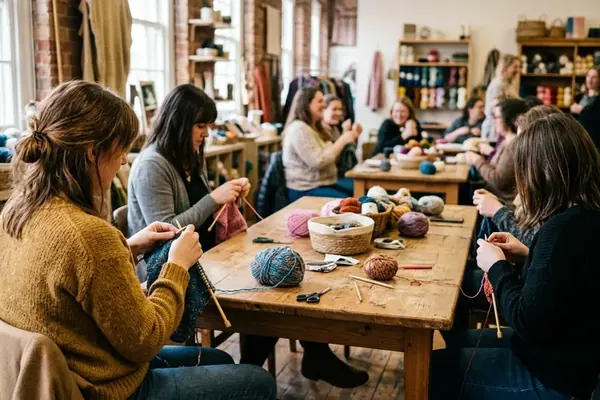
That energy matters for community & events coverage because it shows how a retail experience becomes a gathering. Advanced knitters compare dye lots. New crocheters ask whether a hand-dyed hank needs winding. Travelers trade route notes with locals who know which road gets unpleasant after rain. Skill levels blur when everyone is trying to solve the same practical puzzle: how to see more yarn without rushing the yarn in front of them.
The passport turns participation into motion, and motion turns isolated shop visits into shared regional memory.
For makers who usually practice the craft at home, that shared memory can be powerful. A blanket square, a lace shawl, or a pair of socks becomes attached to the day it entered the stash. The passport gives that memory a paper trail.
Long-Term Regional Impact
The most useful question is not whether the crawl creates a busy weekend. It does. The better question is what remains after the last passport stamp dries.
Beyond the Event Dates
Repeat visitor patterns extending past the event dates suggest that the crawl can reshape how makers think about the Central Texas fiber arts market. A shop that began as a passport stop may become a future destination for classes, tools & notions, yarn reviews, or help with a difficult pattern. A dyer discovered through a themed skein may become part of a maker’s regular buying vocabulary.
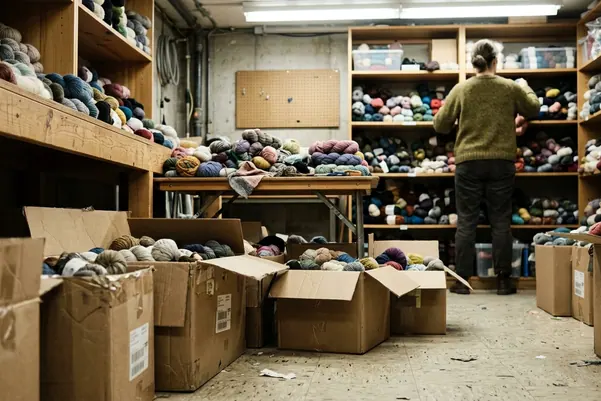
Sustained inventory restocking was noted into the following month, which is one of the more grounded signs of impact. Restocking after a crawl is not merely a cleanup task. It reflects demand that outlasted the event window and pushed shops to rebuild selections for returning customers.
The market effect is regional rather than abstract. Fourteen retailers do not become identical because they share a crawl. They become more legible to one another’s customers. One shop may be known for garment yarns, another for crochet-friendly cotton blends, another for classes, another for local dye collaborations. The crawl lets those identities sit side by side without flattening them.
A Network You Can Hold in Your Hands
The completed passport is the most honest artifact of the whole event. It does not pretend the crawl was effortless. It shows distance, sequence, persistence, and choice. Every stamp marks a doorway crossed and a local business entered.
That physical record reframes the economic story. A single skein bought in one town is a retail transaction. A passport filled across several hundred miles becomes evidence of a regional fiber arts ecosystem, one built through roads, shop counters, indie dye pots, pattern samples, and the steady appetite of makers who want their craft to feel connected to place.
The limitation is practical and worth naming before the romance gets too tidy: full participation requires reliable transportation across rural roads. That access issue shapes who can complete the whole route and who experiences the crawl in smaller sections.
Still, the event’s lasting strength sits in its structure. It gives independent shops a shared calendar without asking them to give up their individual character. It gives local dyers a concentrated showcase without removing the shop relationship that helps customers choose well. It gives knitters and crocheters a reason to turn a private craft into a public weekend.
At the end, the sharpest measure is not a sales total or a social post; it is a completed passport holding fourteen stamps from fourteen Central Texas yarn shops.



Discussion
No comments yet. Be the first!
Write a Comment