
Sensory Triggers on the Trail
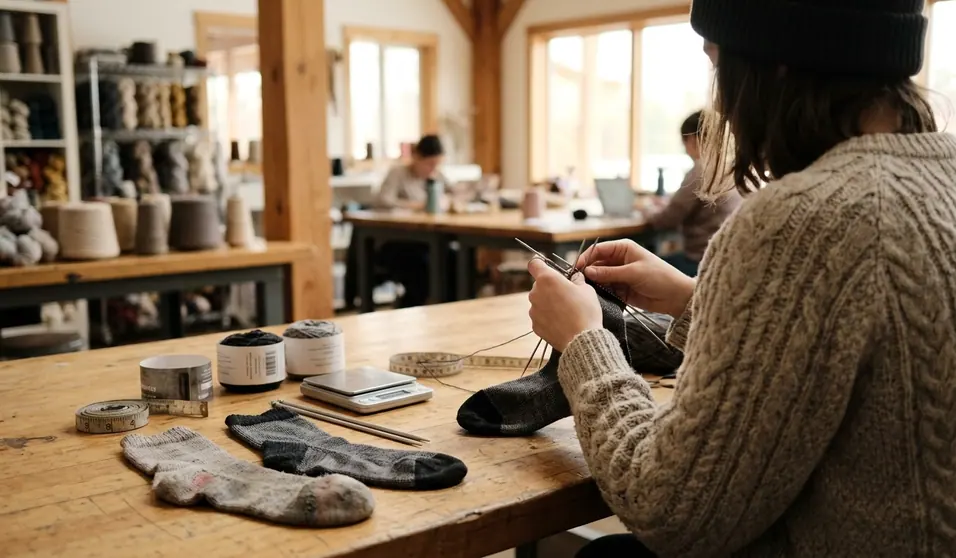
Pulling a hand-knit sock out of a leather hiking boot after nearly 14 km on the trail offers an immediate education in fiber mechanics. The heel stitches sit visibly flattened against the skin, compressed by thousands of repetitive steps over uneven terrain. Underneath, the sole stays cool and damp to the touch for something in the range of 40 to 55 minutes after the boot comes off—a specific sensory trigger that prompted a closer look at how different reinforcing fibers actually behave under pressure.
Knitters have long relied on synthetic nylon for durability. Natural silk carries a historical reputation for strength. Moving past anecdotal preferences requires documenting actual structural changes over a sustained period of heavy use. The debate between these two additives often centers on abstract concepts of longevity. We need to look at the physical reality of the fabric.
That damp, compressed sock tells a story about moisture management and abrasion resistance. It highlights the demands placed on our handwoven goods. Every project represents a significant investment of time and skill. Understanding how the chosen materials will endure the rigors of daily life helps ensure that investment pays off. The goal here involves observing the subtle shifts in stitch definition, elasticity, and surface texture as the weeks turn into months.
The tactile feedback from a worn garment provides invaluable insights. How the fabric drapes, stretches, and recovers informs our future yarn choices. A hiking boot serves as an uncompromising testing ground. Rigid leather and an unyielding sole amplify the stresses placed on the knitted fabric. Friction generated during a long walk exposes the vulnerabilities of the yarn, while moisture produced by the foot tests the breathability of the blend. Together, these factors create a demanding setting for evaluating fiber performance. That first sensory impression of the damp sock starts a deeper investigation, moving the conversation from theoretical properties to practical realities. Attention shifts to the tangible evidence of wear and tear. Flattened stitches and lingering dampness demand an explanation. They challenge our assumptions about the materials we use, and they encourage a more analytical approach to our craft.
Matching Grist and Twist for a Fair Baseline
The materials required a strict baseline. To trace wear differences directly to fiber content rather than yarn architecture, the selected 80/20 merino-nylon and 80/20 merino-silk blends both measured exactly 400 m per 100 g. They featured matching plied twist directions. This structural similarity ensures that any variations in durability stem from the reinforcing fiber itself.
The fabric was knit at a firm gauge of 8 stitches per 2.5 cm on 2.25 mm needles. Both pairs followed a standard top-down construction featuring a reinforced heel flap and gusset. Work spread across approximately 11 to 13 evening knitting sessions. Establishing these controls provides a clear framework for observation. A single wearer's specific gait, leather-boot linings, and sock-only cool washes shape these wear curves, meaning the outcomes indicate directional trends rather than universal durability guarantees.
A reinforced heel flap adds an extra layer of density to a known high-friction area, and the gusset provides necessary ease for the instep. Every choice in the construction phase aims to create a sturdy, wearable garment. Preparing both pairs identically sets the stage for a fair evaluation of their respective strengths. The knitting itself revealed subtle differences in how the yarns handled. Silk glided smoothly over the needles, producing a fabric with a distinct luster. Nylon felt slightly more grippy, resulting in a denser, more matte finish. Tension remained consistent across all sessions, and careful attention to gauge ensures that the resulting fabrics possess identical structural integrity.
Top-down construction allows for precise fitting and reinforcement where it matters most. The heel flap, worked in a slipped-stitch pattern, creates a double-thick layer of fabric. Gusset decreases shape the sock to the contours of the foot. A grafted toe eliminates a potential point of irritation. Executing the pattern this carefully minimizes the influence of construction variables, so the focus remains squarely on the performance of the fibers. The measured pace of the knitting stands in contrast to the unpredictable conditions of the trail. That preparation ensures the observations that follow rest on a solid foundation.
Tracking Wash Memory Through the First Eleven Weeks
Tying inspection points to completed wash cycles rather than calendar days prevents laundry frequency from masking fiber behavior. The first ten wash cycles were logged across weeks one through eleven. Every load used mild agitation and flat air-drying to remove dryer heat from the equation.
The silk blend maintained crisp, light-catching purl bumps straight through cycle ten. Its nylon counterpart raised a uniform 1 to 2 mm halo along the leg fabric by cycles eight through ten. Over time, the silk cuff showed a subtle relaxation. Nylon retained an aggressive snap-back, pulling the fabric taut against the ankle.
Preserving Surface Integrity in the Wash
Surface fuzz on the synthetic blend accelerated noticeably when the socks shared the machine with heavy cotton towels rather than running in sock-only loads. Isolating hand-knit items during laundering protects the yarn from unnecessary abrasive forces.
These early observations highlight the distinct wash memory of each blend. Mild agitation mimics the gentle care typically afforded to hand-knit items, and air-drying preserves the integrity of the fibers. Visual changes in the first eleven weeks provide the first clues about long-term performance. The crispness of the silk suggests a resilience in stitch definition, while the halo on the nylon indicates a different response to friction and water.
Washing introduces a new set of stresses to the fabric. Agitation of the water and friction against other garments test the stability of the yarn, and drying reveals the memory of the fibers. How the fabric responds to these stresses provides valuable information about its durability. Silk's ability to maintain stitch definition points to a strong internal structure; nylon's tendency to develop a halo suggests a looser binding of the fibers. Those heavy cotton towels underline the importance of careful laundering, since the rougher fabric accelerates wear on the synthetic blend. Subtle relaxation in the silk cuff indicates a gradual yielding to the shape of the wearer, while the aggressive snap-back of the nylon demonstrates a persistent elasticity. Documenting these changes builds a comprehensive picture of fiber behavior, because wash memory shapes both long-term appearance and performance.
Friction and Flex at the Heel Turn
Close inspection focused on the heel turn, toe decreases, and gusset columns. These three zones repeatedly rub shoe linings and flex with each step—areas where friction takes its highest toll. Structured checks around days 120 to 125 and again near days 175 to 180 revealed distinct wear patterns.
The nylon developed localized pills measuring 2 to 4 mm across at the heel turn, though the synthetic core stayed continuous beneath the surface fuzz. Silk resisted pilling entirely. It underwent a gradual flattening and loss of sheen across a roughly 3 cm patch at the ball of the foot. This flattening occurred inside stiff leather boots even when the gauge and stitch count matched the nylon pair exactly. Gusset stitches on both pairs remained unbroken, though the silk showed more lateral flattening under sheer flex.
The heel turn bears the brunt of the foot's impact. Toe decreases navigate the confined space at the front of the boot, and gusset columns stretch and recover with every movement of the ankle. Documenting wear in these specific zones provides a detailed map of fiber endurance, and the localized pilling on the nylon contrasts sharply with the flattening of the silk.
Friction from the shoe linings acts as a constant abrasive force, and the flexing of the foot subjects the fabric to repeated stress. Together those forces test the limits of the yarn. Nylon's tendency to pill indicates a breaking of the surface fibers, while the continuous synthetic core provides underlying strength. Silk's resistance to pilling suggests a smoother, more resilient surface; its flattening indicates a yielding to pressure, and the loss of sheen reflects a change in surface texture. Unbroken gusset stitches demonstrate the overall strength of both blends. Lateral flattening of the silk under sheer flex highlights a specific vulnerability. Examining these high-stress zones in detail reveals the nuanced behavior of the fibers and gives tangible evidence of their respective strengths and weaknesses.
Managing Dampness During Cold-Weather Exertion
Active use in varying temperatures shifts the focus from structural durability to wearer comfort. Both pairs saw action on multi-hour hikes in the 2 to 7 °C range lasting 3 to 5 hours. Ambient temperature and exertion stayed matched across the outings.
Judging moisture by hand-feel at sock removal mirrors how a knitter actually evaluates a garment in the field. The silk blend felt noticeably less clammy across the arch immediately after long descents. Nylon released surface damp faster once the boots were off in open air, becoming noticeable within 15 to 25 minutes. Natural and synthetic fibers handle sweat in fundamentally different ways.
Merino wool provides a baseline of warmth, and the reinforcing fibers alter the moisture management profile from there. That tactile difference in dampness at the end of a long day influences the overall experience of the hike. Silk's ability to maintain a comfortable microclimate inside the boot stands out; nylon's rapid drying time offers a different advantage once the exertion ends.
Cold-weather conditions amplify the importance of moisture management. Accumulated sweat can lead to discomfort and a loss of insulation, so the ability of the fabric to wick moisture away from the skin matters. Silk's performance suggests a superior capacity for absorption, while nylon's points to a faster rate of evaporation. Hand-feel evaluation gives a practical assessment of both properties. A less clammy sock contributes to a more pleasant wearing experience; rapid drying facilitates a quicker recovery after the hike. Interplay between the merino wool and the reinforcing fibers determines the overall comfort of the garment. These observations underline how much the intended use should shape yarn selection, since cold-weather exertion demands a careful balance of insulation and moisture management.
Mapping Blends to Footwear Demands
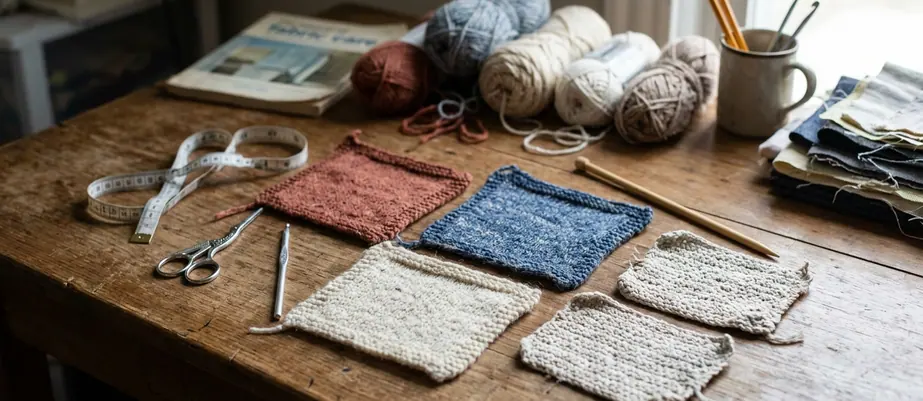
A six-month continuous wear window spanning early autumn through early spring provided clear visual evidence. Scoring stitch definition against elastic resilience helps map each blend to a specific use case, and the six-month photo set documented those structural changes side by side.
Trade-offs become apparent when reviewing the accumulated observations. Crisp stitch definition in the silk appeals to those prioritizing visual texture, while the elastic resilience of the nylon suits applications requiring a firm, enduring grip. Practical recommendations emerge from there: the intended use of the garment should guide the fiber choice. House socks and hiking socks demand different qualities from their yarn, and the mechanics of the fibers dictate their performance under stress.
Aligning Fiber Choice with Footwear Demands
- Primary use is house or office wear with soft slippers: favor merino-silk for stitch clarity and hand.
- Primary use is multi-hour hikes in leather or stiff boots: favor merino-nylon for heel/toe abrasion resistance.
This kind of evaluation moves beyond simple preference toward a more objective assessment. Visual evidence from the six-month trial provides a solid foundation for decision-making, and scoring stitch definition alongside elastic resilience offers a practical framework for comparison. Trade-offs between the two blends highlight the importance of matching material to application. Silk enhances the appearance of intricate stitch patterns; nylon ensures a secure fit over time. The distinction between house socks and hiking socks illustrates the need for tailored solutions, and understanding fiber mechanics empowers knitters to make informed choices.
One established textile principle explains much of what the arch of that sock revealed after a long descent: silk absorbs up to roughly 30 percent of its weight in moisture before it ever feels damp against the skin.





Discussion
No comments yet. Be the first!
Write a Comment